
5 urban legends and superstitions of Barcelona
Barcelona isn't just sun and beach. It's also a city of cursed theatres, martyred saints and houses people tell strange stories about.
31 March 2025 · 3 min read
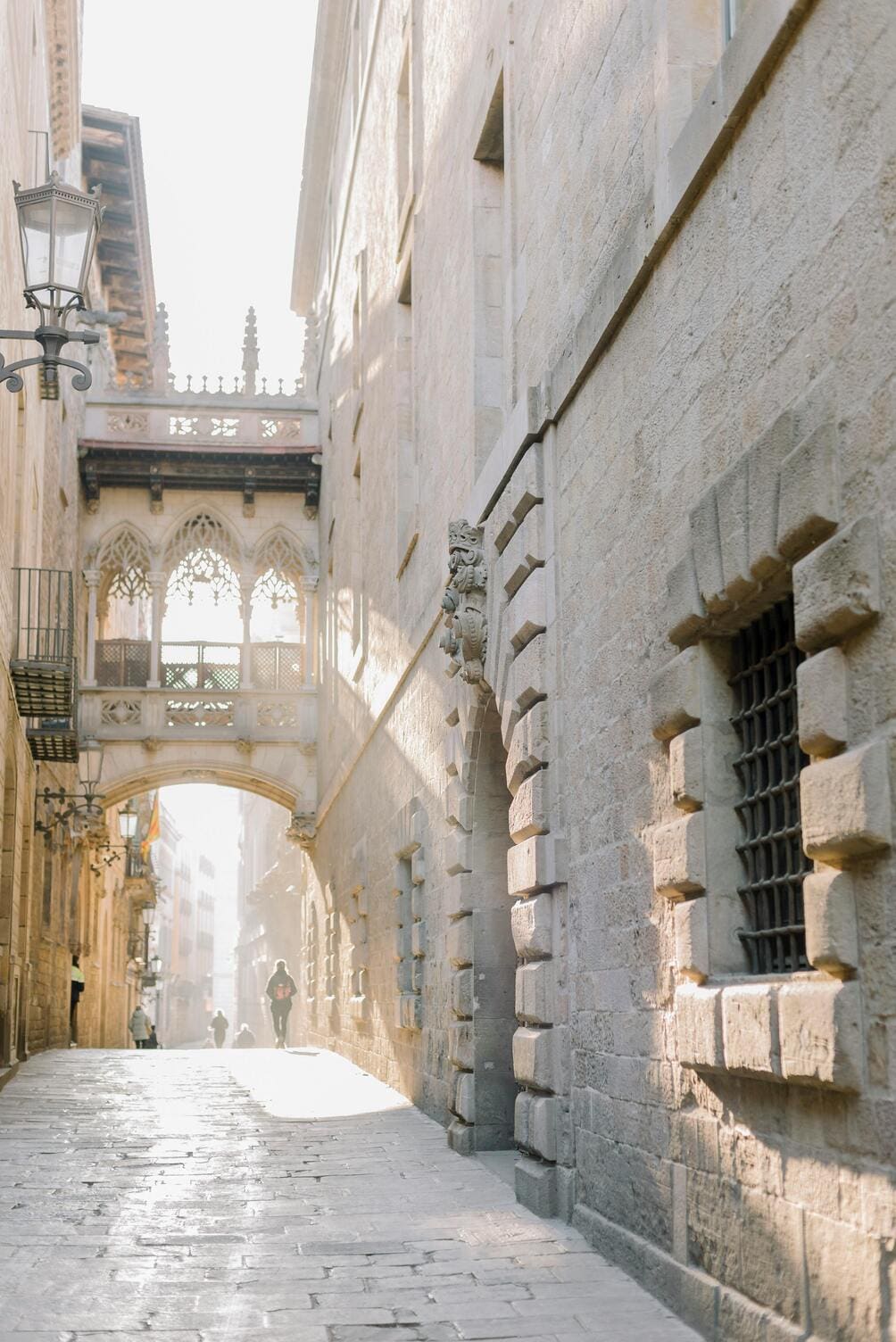
Beyond the beach and the tapas, Barcelona carries centuries of stories passed down by word of mouth. Some have a basis in fact, others have been embellished over time and a few are pure invention. But they're all part of the city, and they turn up in its streets and buildings. These are five of the ones you'll hear most often.
1. The curse of the Liceu
The Gran Teatre del Liceu, on La Rambla, has a reputation as a cursed theatre, and it's not without reason. It burnt down in 1861, just a few years after opening, and caught fire again in 1994. In between, on 7 November 1893, the anarchist Santiago Salvador threw two bombs from the top floor into the stalls during William Tell, killing around twenty people. With a history like that, it's no surprise that legends circulate: some say the site carries the bad luck of an old convent, and others claim to have seen the figure of a woman on the upper floors. None of it is documented, but the stories keep getting told.
2. The cathedral's 13 geese
Thirteen white geese live in the cathedral cloister, and they're not there by chance. According to tradition, they recall Saint Eulàlia, co-patron saint of Barcelona, who was thirteen when she was martyred in Roman times, around the year 303. The legend says she suffered thirteen tortures, one for each year of her life, and that one of them was being rolled downhill inside a barrel full of sharp objects. It's said to have happened on the street now called Baixada de Santa Eulàlia, a few steps from the cathedral.
3. The lions of the Columbus monument
At the bottom of La Rambla, by the port, the Columbus monument has eight large bronze lions around its base. They've been a meeting point for decades, and almost everyone ends up touching them or climbing on for a photo, so much so that they need restoring regularly. Some people say touching them brings good luck or guarantees you'll come back to Barcelona, although it's neither an old nor a documented tradition. It looks more like one of those customs that just spring up on their own. The lion is, however, a symbol of strength that appears on many of the city's monuments.
4. The haunted houses of Bonanova
Bonanova today is a quiet neighbourhood of grand villas and sloping streets, but some of those old houses are said to be haunted. Neighbours tell of pianos playing in empty houses, lights switching on by themselves and rooms that are always cold. We haven't been able to confirm any of these stories, the kind that get handed down from one generation to the next, but they give the neighbourhood a mysterious air after dark.
5. The creatures of the cathedral
Barcelona Cathedral is covered in gargoyles: dragons, fantastical animals, a unicorn and even an elephant. According to tradition, they were there to ward off evil spirits, and some people search among them for the face of the devil. A detail few people know: the main façade, the one in all the photos, isn't medieval. It's neo-Gothic, completed between the late 19th century and 1913, following a 15th-century drawing. The gargoyles on the sides and around the cloister are the ones with the most history.
These legends don't always make it into the guidebooks, but they're part of the city's character. You can walk to almost all of them around the Gothic Quarter and La Rambla, which is a good excuse to lose yourself in the old town.
If you fancy staying close to all these stories, take a look at our apartments.
Keep reading
 What's on
Things to do in Barcelona in November 2026
November is when Barcelona goes back to the people who live here. These are this year's festivals, street parties and exhibitions, with dates we've checked.
 Restaurants
Where to eat in Barceloneta: seafood, bombas and vermouth like a local
The real Barceloneta starts two streets back from the beach. These are the neighbourhood bodegas, tapas counters and rice houses we actually go to.
 Restaurants
Where to eat in El Born: bodegas, tapas and Catalan cooking
From the house fizz on Carrer de Montcada to black rice at Santa Caterina market: the El Born places we actually go to when we eat out.