
Barcelona's city walls: history and where to see what's left
For almost two thousand years Barcelona lived enclosed by walls. They were pulled down more than a century and a half ago, but stretches are still visible if you know where to look.
2 April 2025 · 4 min read
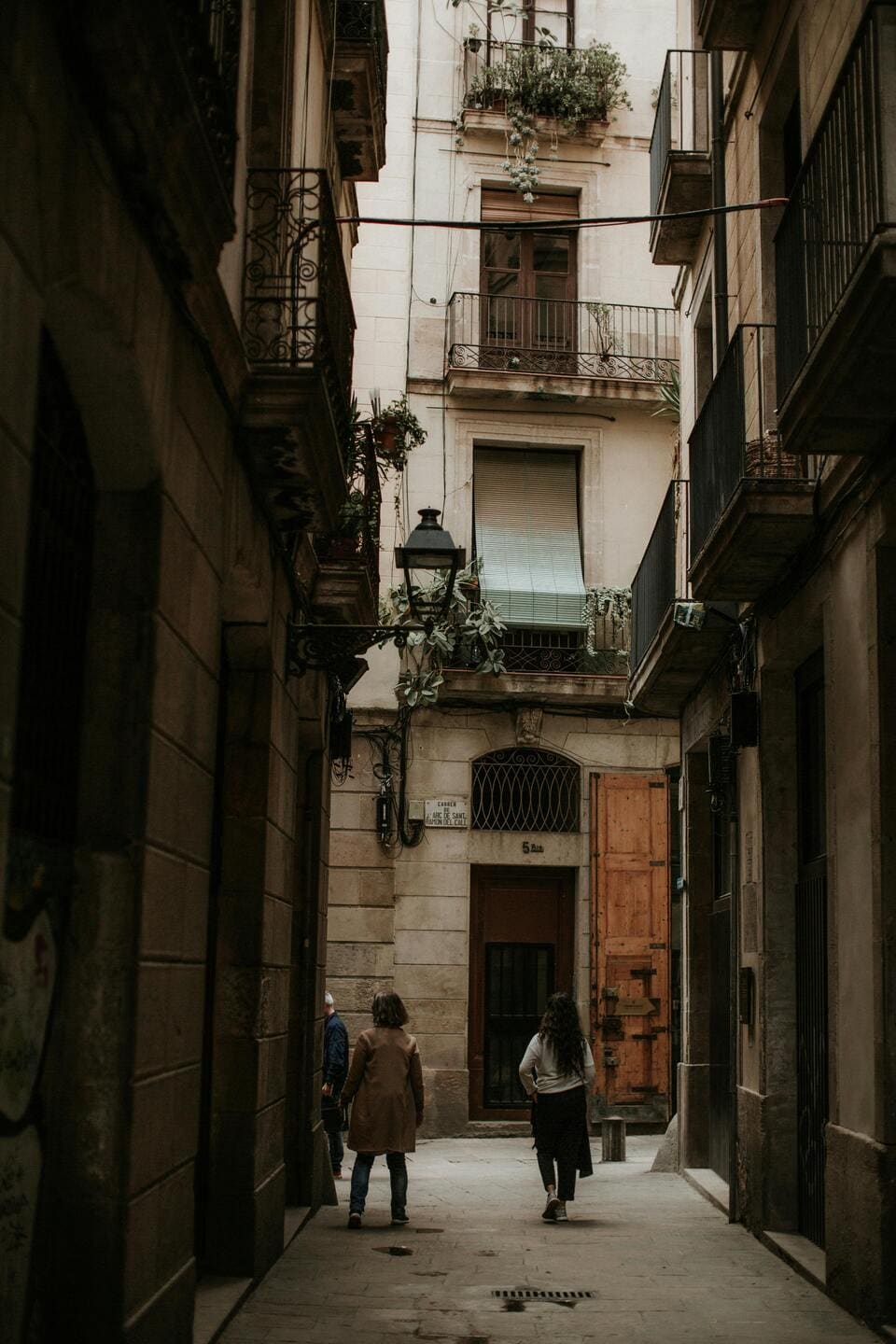
When we think of walled cities, Ávila or Dubrovnik spring to mind, not Barcelona. Yet the city lived surrounded by walls for almost two thousand years. They weren't a wall splitting the city in two, like the one in Berlin, but a belt that both protected and enclosed it, shaping how people lived, worked and moved around. Their story runs from the Romans to the 19th century.
The Romans: the birth of Barcino
Barcelona began as a Roman colony called Barcino, founded around 15 BC. The first wall went up at that time and had few towers, only at the corners and the gates. In the 4th century, at a time of instability in the Empire, it was thoroughly reinforced: the perimeter, roughly 1.2 to 1.5 kilometres, stayed the same, but the wall was made higher and thicker and filled with towers, around 80 according to studies. It enclosed a small area, more or less today's Gothic Quarter.
Many fragments still survive. The two towers on Plaça Nova, next to the cathedral, flanked one of the gates of the Roman city, at the start of Carrer del Bisbe.
The Middle Ages: a growing city
The city grew, and in the 13th century a new wall was built, the wall of Jaume I, which took in the neighbourhoods that had sprung up outside the Roman enclosure, such as Sant Pere and La Ribera, and followed the line of La Rambla. In the 14th century, under Pere III, another went up that took in El Raval, on the other side of La Rambla.
They had gates such as the Portal de l'Àngel and the Portal de Sant Antoni, which were used to control trade and collect taxes, and they protected the city from pirates and invaders. Life inside the walls was tightly regulated, and the gates were shut at night.
Where to see the walls today
Quite a few remains are still visible, especially of the Roman wall:
- Plaça Nova: the two towers next to the cathedral and a stretch of wall, plus some arches from the old aqueduct.
- Carrer de la Tapineria and Plaça de Ramon Berenguer el Gran: one of the best-preserved Roman stretches, with the chapel of Santa Àgata built on top.
- Carrer del Sots-tinent Navarro: a Roman stretch with towers on which the Palau de Requesens was built, near Via Laietana.
- MUHBA, on Plaça del Rei: beneath the museum you can walk through the streets and buildings of Roman Barcino, with remains of the wall.
- Drassanes and the Portal de Santa Madrona: next to the Paral·lel is the only stretch of medieval wall still standing, with the only medieval gate surviving in the city.
Curiosities
- To reinforce the wall in the 4th century, stones from old tombs and monuments were reused. On one of the towers on Avinguda de la Catedral you can see reliefs that probably came from a funerary monument.
- In 1808 Napoleon's troops didn't have to storm the walls: they entered the city as supposed allies and took the Ciutadella and Montjuïc by surprise.
- The walls kept the city squeezed in for centuries, with serious problems of overcrowding and poor sanitation.
Why they were pulled down
In 1854 the government finally authorised the demolition of the walls, something the city had been demanding for years. That made it possible to build the Eixample, designed by Ildefons Cerdà, with its grid of wide streets, blocks with chamfered corners and the idea of bringing air and light to the whole city. It was the beginning of modern Barcelona, the Barcelona of neighbourhoods like the Sagrada Família.
A walk along the Roman wall
If you'd like to follow the trail of the wall, start at Plaça de l'Àngel, by Jaume I metro station, and take in these stops:
- Carrer del Sots-tinent Navarro (Roman towers and Palau de Requesens)
- Plaça de Ramon Berenguer el Gran and Carrer de la Tapineria
- MUHBA, on Plaça del Rei
- Plaça Nova (towers of the Roman gate)
- If you've still got energy, head down La Rambla to Drassanes and the Portal de Santa Madrona
It's a short walk through the Gothic Quarter that makes you see the city differently.
Barcelona's walls ended up hidden beneath the modern city, but you can still sense them in its layout, in the street names and in the way people move around the centre. If you're staying in one of our apartments, this walk is right on your doorstep.
Keep reading
 What's on
Things to do in Barcelona in November 2026
November is when Barcelona goes back to the people who live here. These are this year's festivals, street parties and exhibitions, with dates we've checked.
 Restaurants
Where to eat in Barceloneta: seafood, bombas and vermouth like a local
The real Barceloneta starts two streets back from the beach. These are the neighbourhood bodegas, tapas counters and rice houses we actually go to.
 Restaurants
Where to eat in El Born: bodegas, tapas and Catalan cooking
From the house fizz on Carrer de Montcada to black rice at Santa Caterina market: the El Born places we actually go to when we eat out.