
Monthly apartment rental in Barcelona: a practical guide
One month, three or six: what to know before renting a furnished mid-term flat in Barcelona, from a local family that has spent years hosting people who come here to work, study or start again.
20 October 2026 · 8 min read
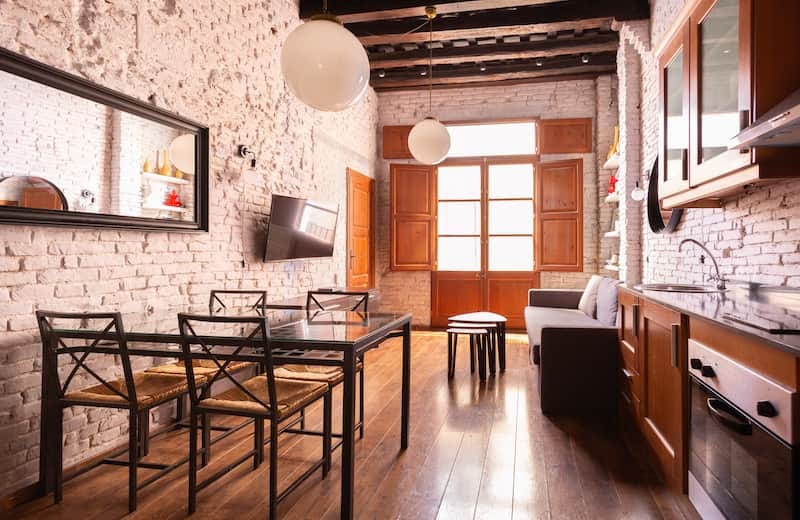
Every year we get messages that sound alike. "My company is moving me to Barcelona in January and I don't know how long I'll stay." "Our daughter is starting a master's and we need somewhere for the first term." "My father is having treatment at a hospital here and we want to be close." None of these people want a hotel. Nor do they want to sign a five-year lease. They want a furnished flat, ready to live in, for a few months.
That, in short, is a mid-term rental. Here is what we've learnt in more than fifteen years of hosting people in Barcelona: who it makes sense for, how it differs from the other options, what paperwork is usually asked for, and how to choose an area when you're going to live in it, not just visit.
Who a monthly rental is for
The mix of people is wider than you might think. These are the cases we see most:
- Temporary work. A six-month project, maternity cover, a company transfer while you look for a permanent home.
- Study. An Erasmus semester, a master's, an internship, an intensive language course.
- Digital nomads. People who work remotely and want a season in the city with a normal routine.
- Relocation. Families or couples moving to Barcelona who need a base while they view flats, look for schools or wait for the keys to their new home.
- Medical stays. Patients coming for treatment at a hospital in the city, and the relatives who come with them.
What they have in common is a specific reason and a return date, even a rough one. That matters, and not only for planning, as you'll see below.
Mid-term, holiday or long-term: how they differ
Three ways of renting a flat exist side by side in Barcelona, and they are not the same thing.
Holiday rental
This is for city breaks and holidays: a few nights or a few weeks. In Catalonia, flats let this way must be on the tourism register, and in Barcelona guests also pay the tourist tax per person per night.
Long-term lease
The classic tenancy: the flat where you live permanently. It has its own rules on length and renewals, and in high-pressure housing areas such as Barcelona it also has rent limits.
Mid-term (seasonal) rental
It sits between the two. It covers a real but temporary need for housing: you live in the flat because you're away from your usual home for a specific reason. It's usually furnished, and the stay is counted in months rather than nights.
The rules on this kind of rental have changed quickly. Since 1 January 2026, Catalan Law 11/2025 requires a seasonal rental contract to state the reason for the temporary stay and to back it up with documents. The reasons it covers include work, professional reasons, study and medical care. If the reason isn't justified, the law presumes it's a permanent housing tenancy, with what that means for length and renewals. These contracts are also subject to the rent limits that apply in high-pressure areas.
At national level, in October 2026 the Spanish government passed a royal decree-law that adds a temporary housing tenancy to the Urban Leases Act: longer than 31 days and, as a general rule, up to twelve months, always with a justified reason that can be proved. A decree-law has to go through Parliament, and the previous attempt was repealed within weeks, so check where things stand when you read this.
This is a general summary, not legal advice. If your situation has any complications, speak to a professional.
What a furnished flat usually includes
A mid-term flat is meant for you to arrive with a suitcase and start living. You'll usually find:
- Full furniture: beds, sofa, table, wardrobes.
- A kitchen with what you need to cook every day.
- Bed linen and towels.
- Wi-Fi, which is often the first thing remote workers ask about.
- Basic appliances: fridge, washing machine and, depending on the flat, microwave, oven or coffee machine.
In our case, every flat has Wi-Fi, a washing machine and air conditioning; the rest of the equipment varies from flat to flat. Check each apartment's page before you decide. If you'll be working from home, look at whether there's a comfortable table and how much light the living room gets: after a month, you notice.
Documents you'll usually be asked for
Every landlord has their own process, but some things come up again and again:
- ID card or passport for everyone staying. Spain requires all guests to be registered, so you will certainly be asked for this.
- Proof of the reason for your stay. Under the current Catalan rules, it's normal to be asked for a document showing the stay is temporary: a letter from your employer or a work contract, a university or course enrolment, or a medical report or appointment.
- Your usual address, meaning your home outside Barcelona.
- Contact and payment details, depending on how the booking is made.
A practical tip: have those papers scanned before you start looking. Good flats for specific dates go quickly, and people with their documents ready tend to get there first.
If something you need to do in Barcelona requires you to register on the local census (the padró), check the requirements with the city council and mention it to the landlord before booking. Don't assume any mid-term rental will work for that.
How to choose an area for a month (or more)
Choosing an area for a weekend and for three months are different things. When you live somewhere, the supermarket on the corner, the noise at night and your commute matter more than having a monument next door.
A few questions that help:
- Where will you spend your day? Work out the real journey by metro or on foot to the office, university or hospital.
- Do you need quiet? The old town has a lot of street life. If you work from home or get up early, weigh that up.
- What's nearby for everyday life? A market, a supermarket, a chemist, a park to go running.
- How much space do you need? A month in a small flat can work for one person; for two people working from home, a separate bedroom is better.
Our mid-term flats are in three areas, and each suits a different kind of stay:
- Sagrada Família. Residential Eixample, with the L2 and L5 metro on the doorstep and Sant Pau hospital about ten minutes away. Good for people who want calm and for those here for medical reasons.
- El Born. Very central, with characterful streets and Ciutadella Park a few minutes away. For people who want to live the centre on foot.
- Barceloneta. The sea a few minutes away and the L4 metro nearby. For people who want the beach and the seafront in their daily routine.
We also have flats in the Gothic Quarter, by Las Ramblas, but there we only do holiday stays, by the night.
Practical things worth knowing
- Arrival. If you rent with us, we meet you in person at the flat: we hand over the keys, show you how everything works and tell you the basics about the area. Check-in is from 14:00 and check-out by 11:00.
- Get your dates right. Many mid-term flats ask for a minimum of 31 nights. If your stay is five weeks, search by month from the start.
- Ask what's included. Every landlord and every flat works differently. Better to have it clear in writing before you pay.
- Read the terms. Cancellation policy, payments and house rules. Ours are in our booking terms.
- Think about transport. For a month or more, it's worth looking into public transport travel cards rather than buying single tickets.
How to book by the month with HiBcn
In the search box on our website, choose "By month (31+ nights)", enter your arrival date and how many months you're staying. You'll see our mid-term flats that are free for those dates. There are five, and they are only rented by the month: three in Barceloneta, one in El Born and one by the Sagrada Família. They range from flats for two people to a two-bedroom flat for five.
You'll see each flat's price and conditions when you search with your dates. If you'd rather we sent you a quote, or your situation has something unusual about it, write to us with your dates, the number of people and the reason for your stay.
We're a family business and we know each of our flats well. If you're torn between two areas, tell us what you'll be doing in Barcelona and we'll tell you honestly which one suits you better. You can start by seeing the flats available by the month or have a look at all our apartments.
Keep reading
 What's on
Things to do in Barcelona in November 2026
November is when Barcelona goes back to the people who live here. These are this year's festivals, street parties and exhibitions, with dates we've checked.
 Restaurants
Where to eat in Barceloneta: seafood, bombas and vermouth like a local
The real Barceloneta starts two streets back from the beach. These are the neighbourhood bodegas, tapas counters and rice houses we actually go to.
 Restaurants
Where to eat in El Born: bodegas, tapas and Catalan cooking
From the house fizz on Carrer de Montcada to black rice at Santa Caterina market: the El Born places we actually go to when we eat out.