
Where to stay near Sagrada Familia: a local guide to the area
We've been welcoming guests one block from the Sagrada Familia for years. Here's what the area is really like, how to plan your visit and why it works so well as a base for families.
20 October 2026 · 7 min read
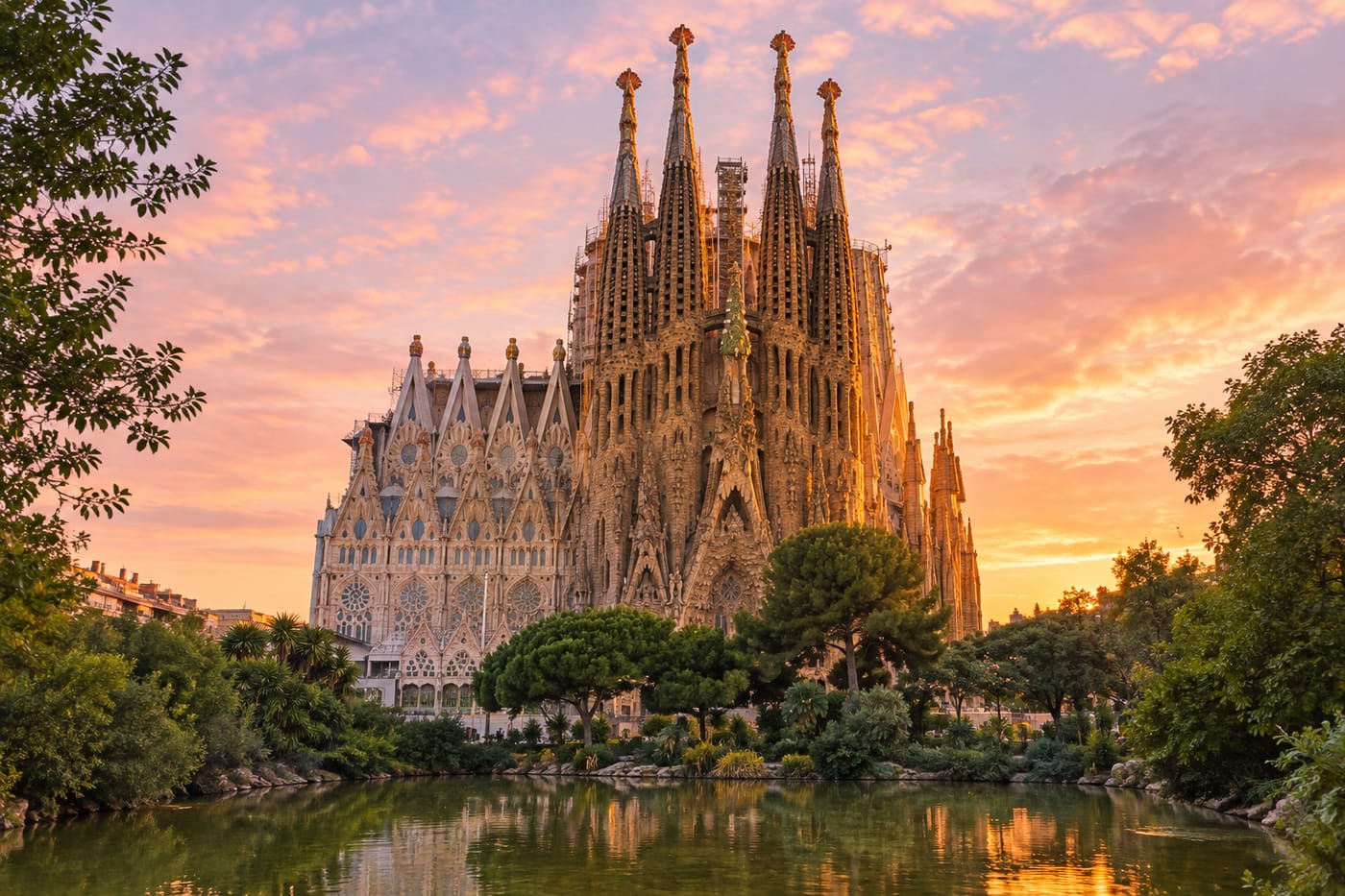
People often ask us the same thing before they book: is it worth sleeping next to the Sagrada Familia, or is the old town a better bet? The short answer is that it depends on how you travel. If you're coming with children, in a group, or you simply want a good night's sleep after a long day, this corner of the Eixample has a lot going for it.
Here's what we've learnt about the area after more than fifteen years working in Barcelona.
Where exactly it is
The Sagrada Familia takes up a whole Eixample block, between Carrer de Sardenya, Carrer de Marina, Carrer de Provença and Carrer de Mallorca. On either side of the basilica there's a square with gardens and a pond: Plaça de Gaudí and Plaça de la Sagrada Família. That's where the classic photos of the façades are taken.
Our flats in this area are all in the same building on Carrer de Sicília, one block from the basilica. From the front door it's a couple of minutes' walk. Close enough to pop home mid-afternoon for a rest, and far enough not to have tour groups under your window.
How to visit the basilica without the stress
Book your ticket in advance
The most important thing: buy your ticket before you come, and buy it on the official website, sagradafamilia.org. When you book you choose a day and a time slot, so it helps to have that settled before you plan the rest of the day. In high season the good slots sell out, especially at weekends and in school holidays.
Be wary of websites that look like the official one but aren't. There are plenty of them. If in doubt, always go in through the official address.
One practical point: the basilica is a working church, and it sometimes closes for services or bad weather. In early October this year, for example, it stayed shut for a morning because of a storm warning. Check the notices on the official site a couple of days before your visit.
When to go
There's no perfect time, but there are a few pointers:
- First thing in the morning. This is usually the calmest time, inside and out. The Nativity façade, which faces Plaça de Gaudí, gets the morning light.
- Mid-afternoon. The sun comes in on the Passion façade side and the stained glass fills the interior with warm colours. This is when most people come out open-mouthed.
- Spring and autumn. It's less hot while you wait and the light is softer. In high summer, midday is the hardest time to stand in the sun in a queue.
If you're staying next door, you can do something other visitors can't: go at whatever time suits you and be home in two minutes if the children get tired. You can also walk past at night, lit up and almost empty, on your way back from dinner.
The Eixample around the basilica
Avinguda de Gaudí and Sant Pau
From Plaça de Gaudí, Avinguda de Gaudí runs off diagonally. It's a tree-lined avenue with little traffic and plenty of café terraces. The street lamps were designed by the architect Pere Falqués. It's a nice walk at any time of day and one of the places where locals sit down for a drink.
At the far end is the Recinte Modernista de Sant Pau, the former hospital designed by Lluís Domènech i Montaner. It covers several Eixample blocks and was declared a UNESCO World Heritage Site in 1997. You can visit it, and compared with the Sagrada Familia it's usually much quieter. For many of our guests it's the surprise of the trip.
It's about a ten-minute walk from our flats.
An area where people actually live
What we like most about this part of town is that once you're a street or two away from the basilica, it's an ordinary neighbourhood again. There are schools, bakeries, greengrocers, chemists and old-school bars serving a set lunch.
The Mercat de la Sagrada Família is a few minutes away. It has a nice story: it started in the mid-1940s as an open-air street market on Carrer de Sicília itself, before moving into the building it uses today. It's a good place to buy fruit, cured meats and bread if your flat has a kitchen.
Where to eat
We'll give you our recommendations in person when we hand over the keys, because they change over time. But here's a rule of thumb that works:
- Avoid the terraces looking straight at the basilica. You're paying for the view, not the food.
- Walk two streets in any direction. Along Carrer de Sicília, Nàpols, Provença or Mallorca you'll find neighbourhood bars with a set lunch at midday.
- Avinguda de Gaudí is better for a coffee or a vermouth in the sun than for a special dinner.
- Shop at the market and eat in one night. With small children, that's sometimes what everyone appreciates most.
Getting around from here
Metro
Sagrada Família station has two lines, L2 (purple) and L5 (blue), right on the corner of the basilica. Between them they take you almost everywhere:
- To the centre and Passeig de Gràcia: L2 gets you to Passeig de Gràcia in a few stops. From there, Casa Batlló and La Pedrera are a short walk.
- To Sant Pau: L5 has a stop right next to it, Sant Pau | Dos de Maig, though walking up Avinguda de Gaudí is just as easy.
- To the beach: take L5 one stop to Verdaguer and change to L4 towards the sea. Get off at Barceloneta, a few minutes from the sand.
- To the Gothic Quarter and El Born: also on L4 from Verdaguer. Jaume I, on the edge between the two, is on the same line, one stop before Barceloneta.
If you'd like to get to know the central neighbourhoods before you decide, we have guides to the Gothic Quarter and Las Ramblas and to Barceloneta.
On foot
Barcelona is a very walkable city and the Eixample is flat. If you like walking, heading down to Passeig de Gràcia on foot is a pleasant stroll past modernista buildings. Take the metro back.
Why it's a good base for families
This is the part guests mention most in their reviews. Our flats in the Sagrada Familia area have an average rating of 4.5 on Airbnb, from around 900 reviews.
- More space. Eixample flats tend to be larger than those in the old town. Most of ours in this building have two bedrooms and sleep five.
- Wide, flat streets. With a pushchair you really notice the difference compared with the lanes of the Gothic Quarter.
- Quieter nights. It's a residential area. There's life, but not the kind you get in the bar districts.
- Everything to hand. Supermarkets, chemists, a market and parks without leaving the neighbourhood.
- Good connections. Two metro lines on the corner.
Some of our flats have a balcony, and there's a penthouse with a terrace. You can see the details of each one, including amenities, on the flat's page.
What we won't hide from you
Right in front of the basilica it's busy almost all day. Guided groups, coaches, street sellers and queues on the pavements. If you walk past mid-morning in August, it can feel like a lot.
Our advice: don't hang around that perimeter longer than you need to. As soon as you cross to the next street, the atmosphere changes completely. And keep an eye on your phone and wallet where crowds gather, as you would anywhere that gets a lot of visitors.
One more thing to bear in mind: if your plan is to go out in the centre every night, the Gothic Quarter or El Born will be handier. The metro gets you back easily from here, but it's not the same as having it on your doorstep.
How staying with us works
We're HiBcn, a family business with 38 apartments in four areas of Barcelona. We meet you in person at the flat to hand over the keys and tell you about the area. Check-in is from 2 pm and check-out is by 11 am. The city's tourist tax isn't included in the price: you pay it on arrival, by card or in cash.
If you book directly on our website the price is lower than on Booking or Airbnb. And if you're coming for work, study or a longer spell, we have flats for monthly stays.
You can see all our flats in the Sagrada Familia area, with photos and availability, or compare them with the other neighbourhoods on our apartments page. If you're not sure which one suits your family best, drop us a line and we'll help you choose.
Keep reading
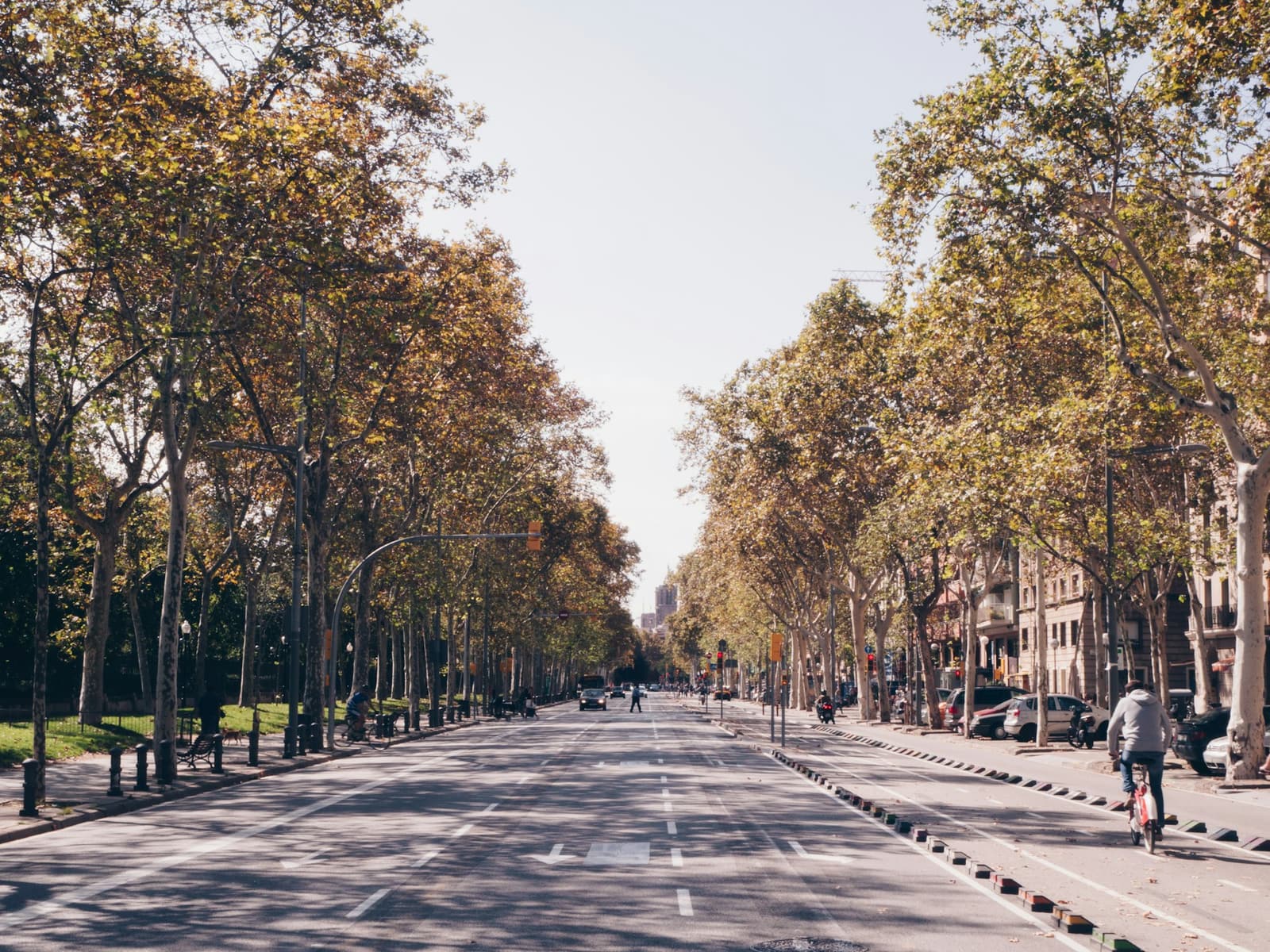 What's on
Things to do in Barcelona in November 2026
November is when Barcelona goes back to the people who live here. These are this year's festivals, street parties and exhibitions, with dates we've checked.
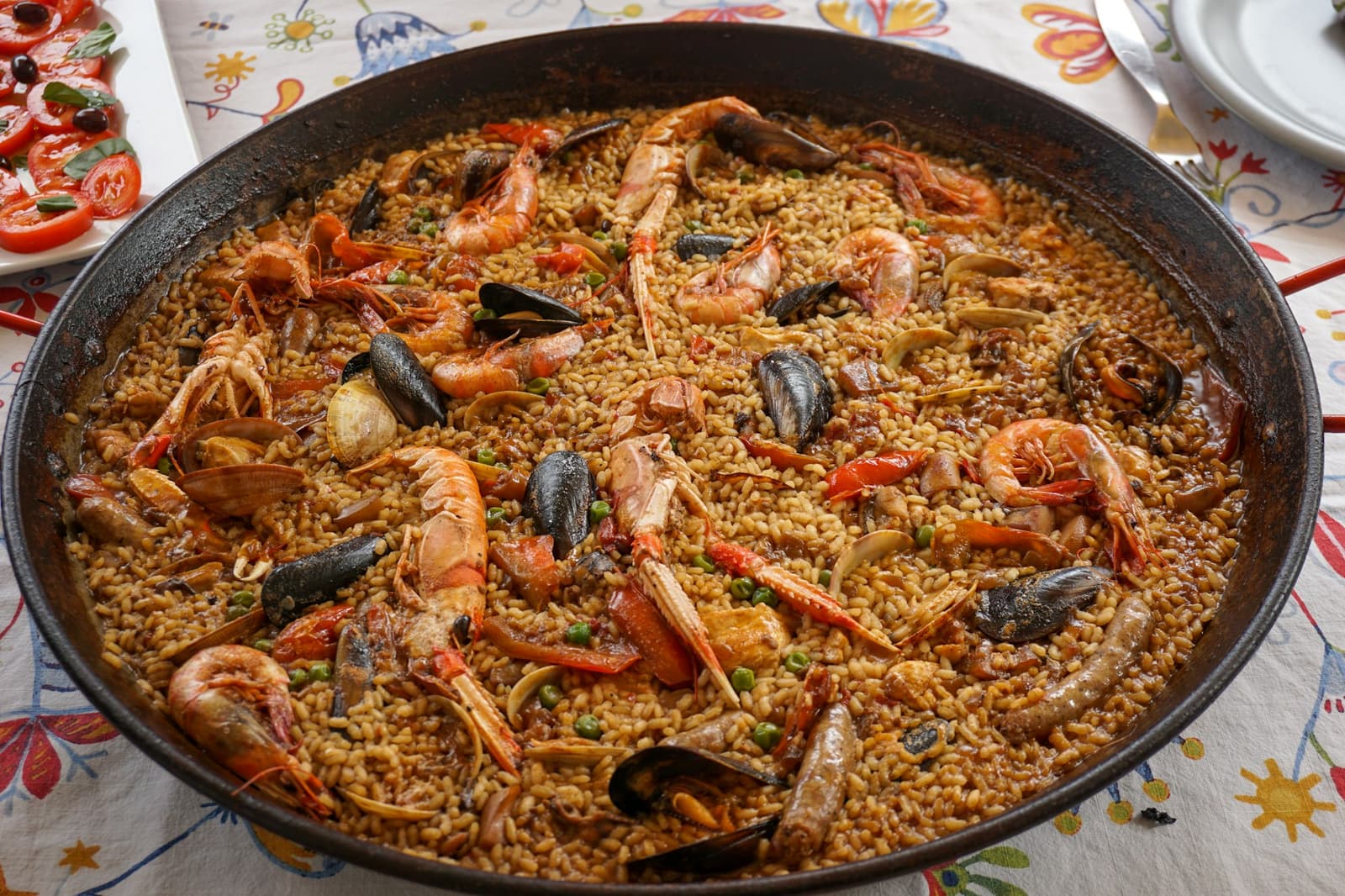 Restaurants
Where to eat in Barceloneta: seafood, bombas and vermouth like a local
The real Barceloneta starts two streets back from the beach. These are the neighbourhood bodegas, tapas counters and rice houses we actually go to.
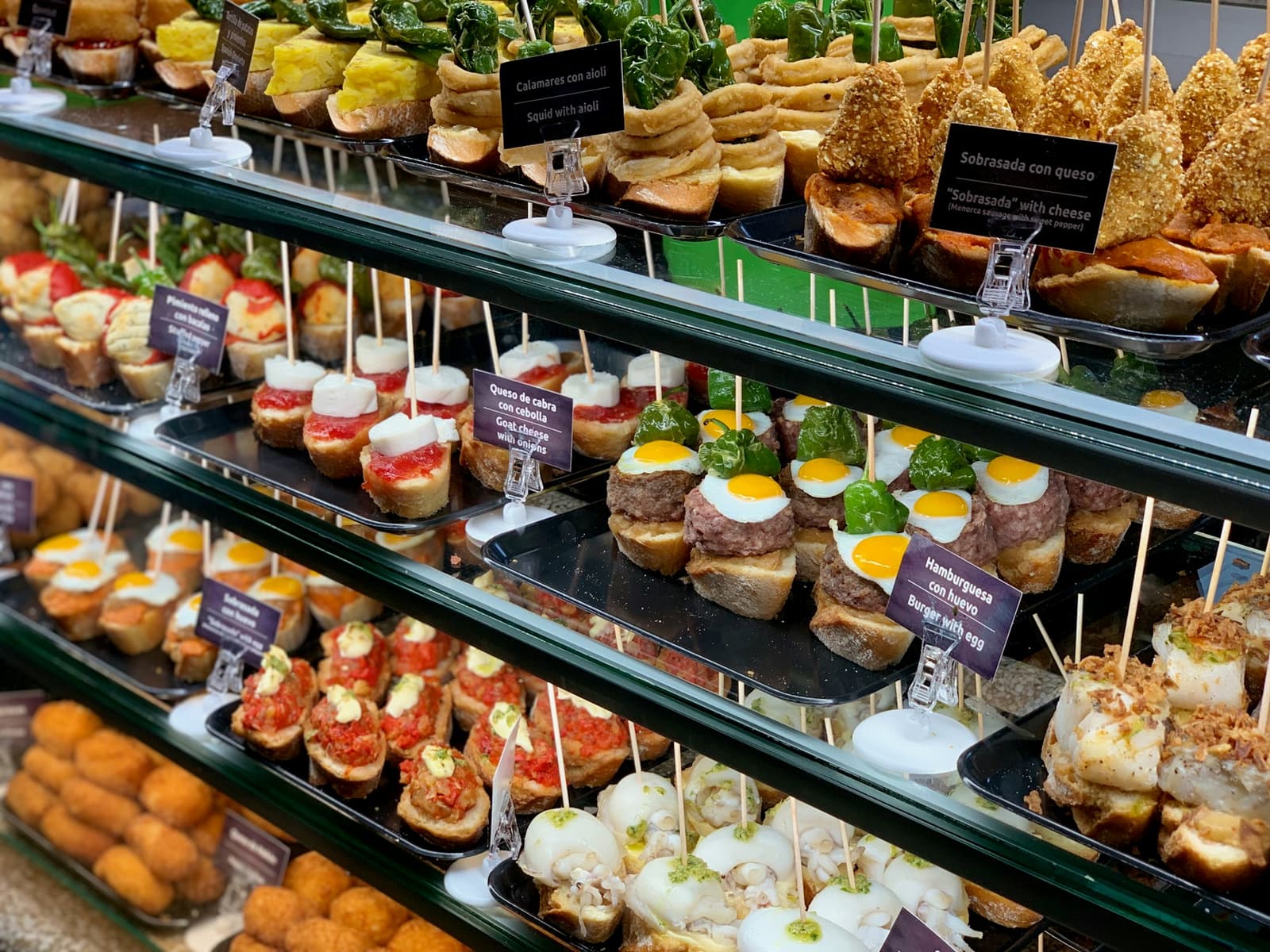 Restaurants
Where to eat in El Born: bodegas, tapas and Catalan cooking
From the house fizz on Carrer de Montcada to black rice at Santa Caterina market: the El Born places we actually go to when we eat out.