
Staying in El Born, Barcelona: a practical guide
El Born is the part of the old town with the most neighbourhood life: museums, small shops, vermouth bars and Ciutadella Park next door. Here's what's worth knowing before you come.
6 November 2026 · 6 min read
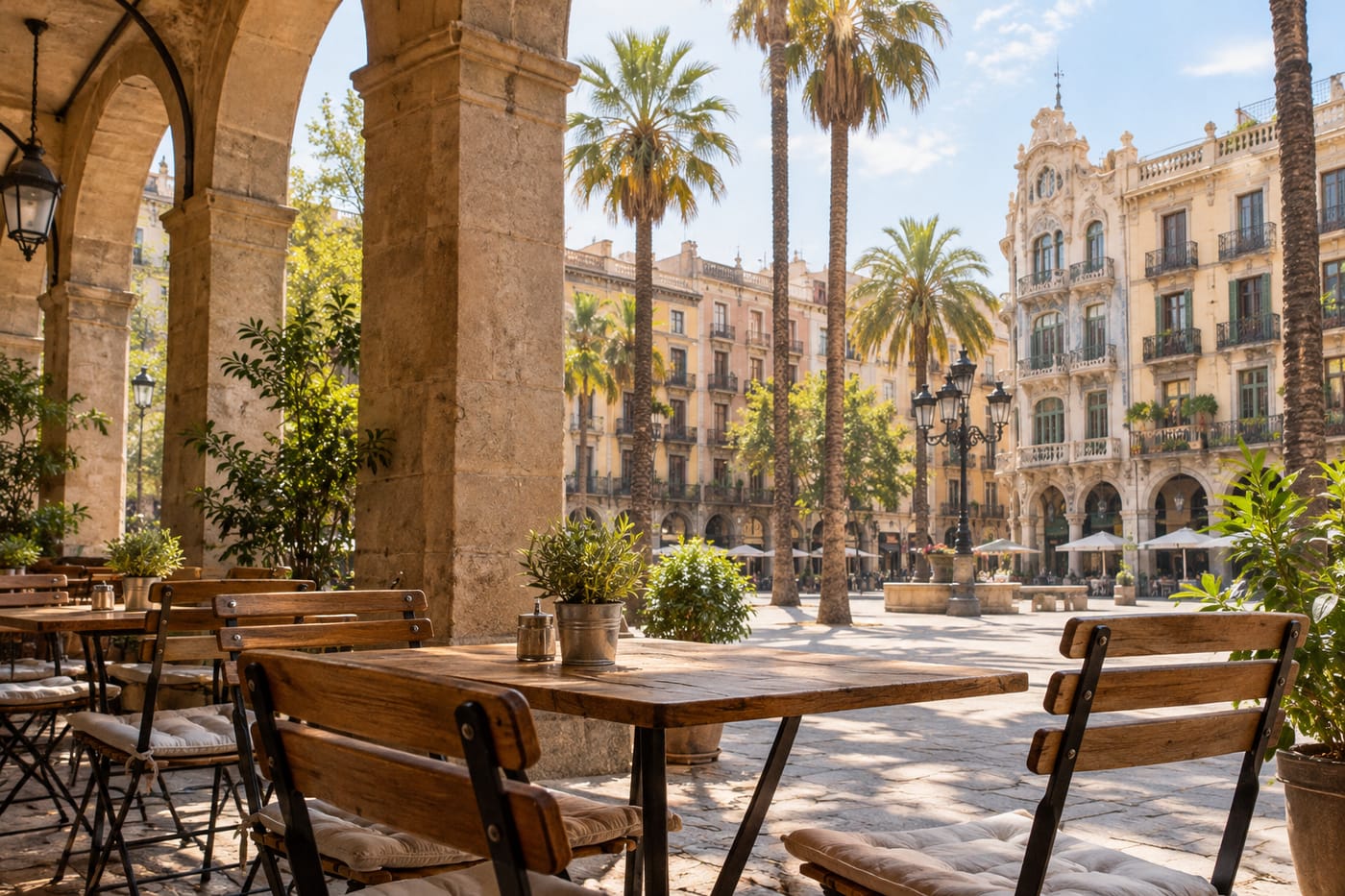
El Born, together with Sant Pere and Santa Caterina, is the part of the old town on the far side of Via Laietana, between the Gothic Quarter and Ciutadella Park. It was the quarter of merchants and guilds in medieval Barcelona, and you can still see it in the street names and in the palaces of Carrer de Montcada.
Our El Born flats are around Carrer de les Portadores, d'En Boquer, d'En Cortines and Sant Pere Mitjà, a few minutes from the Picasso Museum and the Palau de la Música. We're a family that has been welcoming guests in Barcelona for more than 15 years, and this guide is what we usually tell people when they arrive.
Why stay in El Born
It's a central neighbourhood that doesn't feel like a stage set. There are long-time residents, workshops, small design shops and bars where people have vermouth at midday. From here you can walk to the Gothic Quarter, Barceloneta and the port, and you have Ciutadella Park for a run, a stroll or a lie on the grass.
It suits couples, people on their second or third visit to Barcelona and anyone who wants to eat well without taking the metro. If you'd rather have a quieter, more residential area at night, the Eixample may suit you better. We explain the options in our guide on where to stay in Barcelona.
What to see on foot
Santa Maria del Mar
This is the neighbourhood church and one of the great works of Catalan Gothic. It was built in the 14th century in just a few decades, which gives it an unusually unified style: a single tall nave, very slender columns and plenty of light. Go in even if churches aren't your thing. The square in front and Carrer de l'Argenteria, which leads up to Via Laietana, are among the prettiest spots in the area.
Carrer de Montcada and the Picasso Museum
Carrer de Montcada is lined with medieval palaces with inner courtyards. Several of them house the Picasso Museum, which focuses mainly on his formative years in Barcelona. There are queues in high season, so it's worth booking a timed ticket on the official website. The museum has free-entry time slots; check which ones before you go, as they change.
El Born Centre de Cultura i Memòria
The old Born market is a large 19th-century iron structure at the end of Passeig del Born. When it was restored, the streets and houses of the neighbourhood appeared exactly as they were in 1714, when the siege of Barcelona ended in the War of the Spanish Succession. Today you can see them from above, in the open air under the roof, and entry to the central space is free.
Right next to it is the Fossar de les Moreres, the memorial to the defenders of 1714, with its eternal flame.
Palau de la Música Catalana
In the Sant Pere part of the neighbourhood, a few minutes from our flats, is the Palau de la Música, one of the best-known Modernista buildings, by the architect Lluís Domènech i Montaner. It's a UNESCO World Heritage Site. You can visit with a guide, but the best way to see it is to go to a concert.
Ciutadella Park and the Arc de Triomf
At the edge of the neighbourhood is Ciutadella, the big park in the centre. It has the monumental Cascada fountain, a boating lake, the Parliament of Catalonia and plenty of people exercising in the morning. Leave along Passeig de Lluís Companys and you reach the Arc de Triomf, built for the 1888 Universal Exhibition.
Markets and food
Santa Caterina
Santa Caterina is the neighbourhood market. You'll recognise it by its wavy roof of coloured ceramic tiles, and inside it's much calmer than La Boqueria. There are fruit, fish and meat stalls, and counters where you can have a good lunch. Like all municipal markets, it's closed on Sundays.
Eating in El Born
El Born is one of the neighbourhoods with the most bars in Barcelona, and not all of them are worth it. We have a guide to the places we go ourselves: where to eat in El Born. If you're staying in a flat, you can also shop at Santa Caterina and cook at home.
Noise
Passeig del Born and the streets around Santa Maria del Mar have terraces and bars open late, especially at weekends and in summer. The Sant Pere side, towards the Palau de la Música, is usually quieter at night. Even so, this is the old town: the streets are narrow, sound carries and the street cleaners come by early in the morning. If you're a light sleeper, bring earplugs.
Getting there from the airport
Josep Tarradellas Barcelona-El Prat airport has two terminals, T1 and T2. Check which one you land at.
Aerobús
Lines A1 (Terminal 1) and A2 (Terminal 2) go to Plaça de Catalunya and run 24 hours a day. From there it's a 15–20 minute walk to El Born along Via Laietana, or you can take a taxi from the square. It's a private service: regular public transport tickets aren't valid.
Rodalies train and metro
The R2 Nord line leaves from Terminal 2 and stops at Passeig de Gràcia. There you can take metro line L4, with no more changes, to Jaume I, on the edge of El Born and the Gothic Quarter. If you land at Terminal 1, there's a free shuttle bus between terminals.
Metro L9 Sud
It has a station at both terminals. Change to L1 at Torrassa and get off at Arc de Triomf, next to Ciutadella. Remember that single tickets and the T-casual aren't valid at the airport stations: you need the Aeroport ticket or the Hola Barcelona travel card.
Taxi
The most comfortable option if there are several of you or you have a lot of luggage. Many streets in El Born are pedestrian or very narrow, so the taxi may drop you a few metres from the door.
Practical tips
Old buildings
Our El Born flats combine exposed brick and wooden beams with recent renovations. They're in old buildings with narrow stairs, and not all of them have a lift. If someone in your group has reduced mobility or you're carrying a lot of luggage, check the flat's page carefully or ask us.
Pickpockets
In the busiest streets, on the metro and on terraces, keep your phone and wallet in front of you and don't hang your bag on the back of your chair. The same as in any big city.
Sundays
Markets and many local shops close on Sundays. If you plan to cook, do your shopping on Saturday.
Tourist tax
Barcelona charges a mandatory tourist tax per person per night. It isn't included in the price of our flats and is paid on arrival, by card or in cash.
Arriving at our El Born flats
Check-in is from 14:00 and check-out is by 11:00. Before you arrive we agree a time with you and welcome you in person at the flat: we give you the keys, show you around and tell you what you need to know about the neighbourhood.
You can see all the flats in the area on the El Born page, or search by dates among all our apartments. Booking on our website gives you an 8% discount on the accommodation.
Keep reading
 What's on
Things to do in Barcelona in November 2026
November is when Barcelona goes back to the people who live here. These are this year's festivals, street parties and exhibitions, with dates we've checked.
 Restaurants
Where to eat in Barceloneta: seafood, bombas and vermouth like a local
The real Barceloneta starts two streets back from the beach. These are the neighbourhood bodegas, tapas counters and rice houses we actually go to.
 Restaurants
Where to eat in El Born: bodegas, tapas and Catalan cooking
From the house fizz on Carrer de Montcada to black rice at Santa Caterina market: the El Born places we actually go to when we eat out.