
Where to stay in Barcelona: a neighbourhood guide
Four neighbourhoods, four ways to experience the city. Here's an honest look at what each one offers, who it suits and what to know before you book.
20 October 2026 · 8 min read
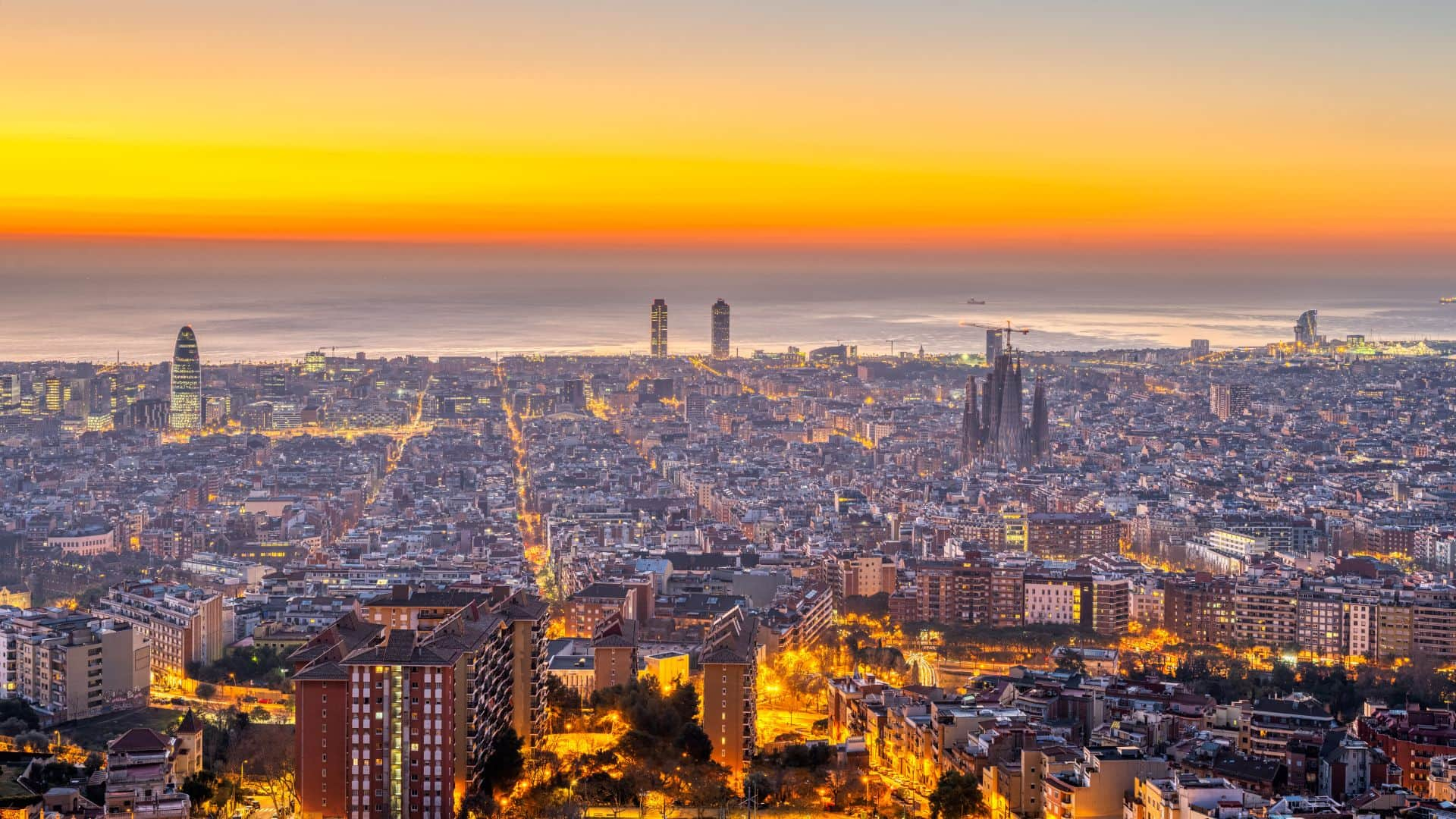
Your choice of neighbourhood in Barcelona shapes the trip more than you might expect. Waking up to the Cathedral bells is not the same as waking up to the sea. Walking home down a medieval lane at midnight is not the same as walking along a wide Eixample street. The city is compact and almost everything is close, but each area has its own rhythm.
At HiBcn we're a family that has been welcoming guests for more than 15 years, and our flats are spread across four neighbourhoods: Sagrada Família, the Gothic Quarter by Las Ramblas, El Born and Barceloneta. We know them well, the good and the less good. This is what we'd tell a friend who asked us where to stay.
The short answer
If you're in a hurry, here's the general idea:
- Families and groups who want a good night's sleep: Sagrada Família and the Eixample.
- First visit, and you want to walk everywhere: the Gothic Quarter.
- Couples, museums, tapas and strolling: El Born.
- Beach and an old fishermen's quarter feel: Barceloneta.
- Nightlife: the Gothic Quarter and El Born, plus Barceloneta in summer.
- Peace and quiet at night: Sagrada Família, without question.
Now, neighbourhood by neighbourhood.
Sagrada Família and the Eixample
What it's like
This is the Barcelona of square blocks, cut-off corners and wide streets. It's a genuinely residential area: schools, bakeries, municipal markets, set-lunch restaurants and neighbours popping out for bread. The basilica is right there, but a couple of streets away it feels like an ordinary neighbourhood.
Our flats here are on Carrer de Sicília, one block from the Sagrada Família. They have an average Airbnb rating of 4.5 out of 5 from around 900 reviews.
Who it suits
Families with children, groups of friends and anyone who values a proper night's sleep. Eixample flats tend to be roomier than those in the old town, and the streets are easier with a pushchair or suitcases. It also works well for longer stays, because you live like a local.
Getting around
Sagrada Família metro station has two lines: L2 (purple) and L5 (blue). The L2 takes you straight to Passeig de Gràcia in a few stops, where you can change to the L3 and L4. The L5 goes to Sants Estació, handy if you arrive or leave by train.
What's walkable
The Sagrada Família, of course. And Avinguda de Gaudí, largely pedestrianised, which leads you in a short walk to the Sant Pau Modernist complex by Domènech i Montaner. It makes a lovely morning without the metro. Passeig de Gràcia and the centre are far enough that most people take the metro.
The downsides
You're outside the old town. To get to the Gothic Quarter or the beach you'll need the metro or a fair walk. And right around the basilica it gets very busy during the day, mostly with tour groups. You notice it on the nearest pavements, not in the rest of the neighbourhood.
The Gothic Quarter and Las Ramblas
What it's like
The old heart of the city. Narrow streets, tucked-away squares, Roman remains and the Cathedral. Everything here happens on foot: you step out of the door and within minutes you're in Plaça Reial, at La Boqueria or heading down to the port.
Our Gothic Quarter flats are on Carrer d'Obradors, two minutes from Las Ramblas. Their average Airbnb rating is 4.5 out of 5, from around 850 reviews.
Who it suits
First-time visitors who want to see a lot in a few days. Groups of friends who want to go out for dinner and walk home. And anyone who enjoys an old city with life on its streets.
Getting around
The nearest station is Liceu, on the L3 (green), which also stops at Drassanes and Catalunya. The Aerobús to the airport leaves from Plaça de Catalunya. But in the Gothic Quarter you'll barely use the metro: almost everything you want to see is walkable.
What's walkable
The Cathedral, Plaça del Rei, Plaça de Sant Felip Neri, the columns of the Roman Temple of Augustus on Carrer del Paradís, La Boqueria, the port and El Born, just across Via Laietana. The beach is walkable too, though it's a long stroll.
The downsides
Noise. The Gothic Quarter is lively until late, especially at weekends and in summer, and in the morning the street cleaners and delivery vans come through. If you're a light sleeper, bring earplugs. Las Ramblas and the streets around them are crowded at almost any hour, and this is where you most need to watch your wallet. Many old buildings have narrow staircases and not all have lifts, so check the flat's details if that matters to you.
If this is your pick, we have a practical guide to staying in the Gothic Quarter with more detail.
El Born
What it's like
El Born (together with Sant Pere and La Ribera) is the part of the old town with the most small shops, workshops, vermouth bars and museums. It's medieval like the Gothic Quarter, but the feel is a little different: more design, more residents, fewer souvenir shops.
It's our best-rated area: 4.8 out of 5 average rating on Airbnb, from around 250 reviews. Some of our flats combine exposed brick and wooden beams with recent renovations.
Who it suits
Couples, museum-goers and people who like to eat well. It also works for a first visit, because the Gothic Quarter and Barceloneta are a short walk away.
Getting around
The nearest station is Jaume I, on the L4 (yellow). In one direction it takes you to Barceloneta, one stop away. In the other, to Urquinaona and Passeig de Gràcia. Arc de Triomf, on the L1, is also close to the upper part of the neighbourhood.
What's walkable
The Picasso Museum, the basilica of Santa Maria del Mar, the Palau de la Música, Santa Caterina market with its colourful roof, Ciutadella Park and the Gothic Quarter. The beach is a reasonable walk.
The downsides
There are bars and terraces at night, and on some streets you can hear them. It's not as intense as the area around Las Ramblas, but it isn't a sleepy neighbourhood either. As in the Gothic Quarter, many old buildings have narrow stairs and a lift isn't guaranteed.
Barceloneta
What it's like
The old fishermen's quarter, a triangle of narrow, straight streets between the port and the beach. Washing hanging from balconies, old-school tapas bars and Barceloneta market on Plaça del Poeta Boscà. And at the end of every street, the sea.
Our flats here are for two or three people, with an average Airbnb rating of 4.6 out of 5 from around 250 reviews.
Who it suits
Couples, and anyone who wants sea and city on the same trip. If your plan is a morning on the beach, a rice dish for lunch and an afternoon in town, this is your place.
Getting around
Barceloneta station is on the L4 (yellow). It gets you to Jaume I, in El Born, in one stop, and to Passeig de Gràcia in a few more. Estació de França, a Rodalies train station, is right next to it.
What's walkable
The beach, the seafront promenade, Port Vell and El Born. You can also walk to the Gothic Quarter along the port.
The downsides
In summer the beach and promenade fill up, and the neighbourhood gets a lot of day visitors. Some streets have a night-time buzz in high season. Because of the way the area was built, flats tend to be small: ideal for two, a squeeze for more. And for Sagrada Família or Gràcia you'll need the metro.
A few tips to help you decide
Think about your routine, not just the map
If you go to bed early and get up early, the Eixample will make life easier. If you eat late and like to stroll home, the Gothic Quarter or El Born make more sense. It's about habits more than distance.
With children, put space and calm first
Families are usually more comfortable around Sagrada Família: roomier flats, wide pavements, parks and a direct metro. If the children want the beach, Barceloneta is a few metro stops away.
For longer stays
If you're coming for a month or more for work, study or to try out the city, look for a neighbourhood with everyday life: a market, a bakery and a metro stop nearby. Some of our flats are monthly only, for stays of 31 nights or more. You'll find them under monthly stays.
The city is small
None of these four neighbourhoods leaves you far from anything. The difference is what's on your doorstep and how well you sleep. Choose on that basis.
Before you book
Whichever neighbourhood you choose, Barcelona has a mandatory tourist tax charged per person per night. At our flats it isn't included in the price and you pay it on arrival, by card or in cash. Check-in is from 2 pm and check-out is by 11 am, and we meet you in person to hand over the keys.
We have 38 flats across these four neighbourhoods, and booking on our website costs less than on Booking or Airbnb. You can browse all the apartments and filter by area, dates and number of guests. If you're not sure which neighbourhood suits you, drop us a line and we'll help.
Keep reading
 What's on
Things to do in Barcelona in November 2026
November is when Barcelona goes back to the people who live here. These are this year's festivals, street parties and exhibitions, with dates we've checked.
 Restaurants
Where to eat in Barceloneta: seafood, bombas and vermouth like a local
The real Barceloneta starts two streets back from the beach. These are the neighbourhood bodegas, tapas counters and rice houses we actually go to.
 Restaurants
Where to eat in El Born: bodegas, tapas and Catalan cooking
From the house fizz on Carrer de Montcada to black rice at Santa Caterina market: the El Born places we actually go to when we eat out.