
What to see in Barcelona in 3 days: a realistic plan, area by area
Three days go a long way if you group your visits by area and book the big sights early. This is the plan we suggest to our guests, with ideas for adapting it if you're travelling with children or in high summer.
20 October 2026 · 8 min read
Almost every guest we welcome arrives with a very long list and not much time. We understand. Barcelona has a lot to see and it's all fairly close together, so it's tempting to squeeze everything into one day.
After many years of showing people around, our advice is simple: one day, one area. If you group your visits by neighbourhood, you walk less, spend less time on the metro and still have the energy to sit down at a terrace café, which is part of the trip too.
Before you arrive: what to book
There are two visits you shouldn't leave to the last minute.
- Sagrada Família. Buy your ticket on the official website, sagradafamilia.org. You choose a date and time when you buy, and it isn't easy to change them afterwards, so decide which day you'll go first. The basilica is a working church and sometimes closes for services or bad weather, so check its notices a couple of days before.
- Park Güell. The monumental zone, with the main staircase and the square with the mosaic bench, needs a ticket. Buy it on the official website, parkguell.barcelona. In high season there are few tickets left for the same day.
Be wary of websites that look like the official ones but aren't. There are lots of them, and they usually charge more for the same thing.
The rest of the plan can be done without booking, or decided as you go.
Day 1: Gòtic, El Born and the port
The first day is for the old town. You can do it all on foot, and it's the best way to understand how the city grew.
Morning: the Gothic Quarter
Start early, before the streets fill up. Head up to the Cathedral and wander the lanes around it. Plaça de Sant Jaume, where the City Hall and the Catalan government building face each other, is just round the corner. Close by is Plaça del Rei, one of the quietest spots in the centre first thing in the morning.
Then walk down to Plaça Reial, with its arches and its lampposts designed by a very young Gaudí. If you want to see La Boqueria, go in the morning: it's a working market and by lunchtime the aisles are hard to get through. You don't need to walk Las Ramblas end to end. One stretch is enough.
We have a more detailed guide to the Gothic Quarter and Las Ramblas if you want to go deeper.
Midday and afternoon: El Born
Cross Via Laietana and you're in El Born. Here you'll find Santa Maria del Mar, our favourite Gothic church in the city, and the Picasso Museum on Carrer de Montcada. If you'd like to visit the museum, book ahead on its official website.
For lunch, El Born and Sant Pere have plenty of tapas and vermouth bars to choose from. Our house rule: walk a couple of streets away from the most photographed spots and look for where the locals eat. At lunchtime, many restaurants in the city offer a menú del día, a set lunch, which is usually the easiest way to eat well.
In the afternoon, Ciutadella Park is a few minutes away. It's a good place to rest your feet in the shade before carrying on. More about the area on our El Born page.
Sunset: Port Vell
End the day by heading down to the sea. From the bottom of Las Ramblas, the walk along Port Vell takes you to Barceloneta. The light is lovely at that time of day, and it's a nice moment to have dinner near the water.
Day 2: Gaudí and the Eixample
Day two is all about modernista architecture. This time you'll use the metro, because the distances are longer.
Morning: the Sagrada Família
Book one of the first slots of the morning if you can. It's usually the calmest time and it leaves the rest of the day free. The visit takes a good while, and it's worth walking round the outside to see both façades from the squares on either side.
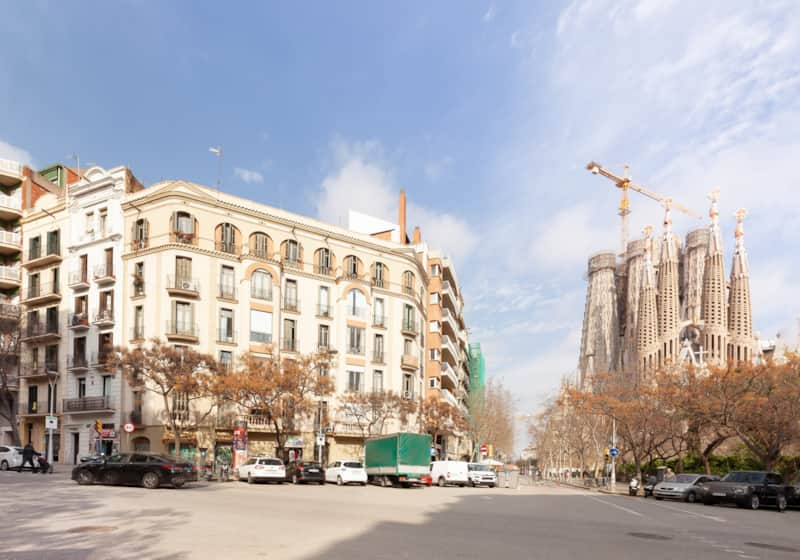
The basilica has a metro station right outside, on the L2 and L5 lines. If you're staying nearby, as in our flats on Carrer de Sicília, it's a couple of minutes' walk. There's more in our guide to the Sagrada Família area.
Midday: Passeig de Gràcia
From the Sagrada Família, Passeig de Gràcia is a long walk or a few metro stops away. This is where you'll find Casa Batlló and La Pedrera, a few blocks apart. Just seeing them from the outside is worth it. If you want to go inside one, pick just one and book it on its official website: doing both on the same day as the Sagrada Família is too much.
For lunch, step off Passeig de Gràcia into the parallel streets of the Eixample. There are lots of neighbourhood restaurants with a set lunch and more normal prices than on the avenue.
Afternoon: Park Güell
Save Park Güell for the afternoon. It sits high above Gràcia, so the easiest way is the metro (L3, Lesseps or Vallcarca stops) and then walking up the last hill. The climb is hard work, but the views from the top make up for it.
The monumental zone, the part that needs a ticket, is only a small part of the park. The rest is free to enter and has lovely paths and viewpoints. For dinner, walk down into Gràcia: squares with terraces, small bars and a real neighbourhood feel. ## Day 3: Montjuïc or the beach (or both)
Day three depends on the time of year and on how your legs are feeling.
Option A: Montjuïc
Montjuïc is the hill that closes off the city to the south, full of gardens and museums. You can go up on the funicular, which leaves from Paral·lel metro station, and get around on foot at the top.
One possible route: Montjuïc Castle, with views over the port and the sea, then the gardens on the way down to the Museu Nacional d'Art de Catalunya. From the museum steps you can see half of Barcelona. If you fancy one big museum, this is the place. Our guide to Barcelona's most iconic museums can help you choose.
For lunch, head down to Poble-sec. Carrer de Blai is lined with pintxos bars and makes for an easy, informal option.
In the evening, if the timing works, you can see the Font Màgica, the large light-and-music fountain below the museum. It only runs on some days and the schedule changes with the season, so check the programme on the City Council's website before you go.
Option B: the beach and Barceloneta
From May to September, many people prefer to spend the last day by the sea. Barceloneta beach is the closest to the centre and the busiest. If you walk north along the seafront, the beaches get wider and there's usually more space.
For lunch, Barceloneta is the place for fish and old-school tapas bars. Ask at the bar what's good that day.
Or a bit of each
You can also do Montjuïc in the morning and go down to the beach in the afternoon. On a long day, it works well.
If you're coming with children
The plan adapts with a few changes:
- Fewer visits, more stops. With children, plan one big visit a day and leave the rest for wandering. Ciutadella, the beach and the Montjuïc gardens are perfect for letting them run about.
- A rest in the afternoon. Going back to the flat for a couple of hours changes the whole day. That's why it helps to stay close to where you'll spend most of your time.
- Mind the hills. Park Güell and Montjuïc have long climbs. If you have a pushchair, the Montjuïc funicular and the metro save a lot of effort.
- Mealtimes. In Spain people have lunch and dinner late. If your children eat early, the set lunch plus a light dinner at the flat is a good combination.
If you're coming in high summer
In July and August the heat is serious, especially around midday. A few adjustments that work for us:
- The hard stuff, early. Book the Sagrada Família and Park Güell first thing, before the sun gets strong.
- Midday under cover. The middle of the day is for a long lunch, a museum or a rest at home.
- The afternoon for the sea. The beach at the end of the day is much nicer than at two in the afternoon.
- Always carry water. Take a bottle and sun cream, even for walks around the centre.
Where to stay for this plan
This itinerary works from any central neighbourhood, because the metro links all the areas well. Even so, choosing the right base helps. If you'd like to compare areas, we have a guide on where to stay in Barcelona.
HiBcn is a family business with flats in Sagrada Família, the Gothic Quarter, El Born and Barceloneta, and we meet you in person when you arrive to hand over the keys and tell you what you need to know about the area. You can browse all our apartments and pick the one that suits your trip.
Keep reading
 What's on
Things to do in Barcelona in November 2026
November is when Barcelona goes back to the people who live here. These are this year's festivals, street parties and exhibitions, with dates we've checked.
 Restaurants
Where to eat in Barceloneta: seafood, bombas and vermouth like a local
The real Barceloneta starts two streets back from the beach. These are the neighbourhood bodegas, tapas counters and rice houses we actually go to.
 Restaurants
Where to eat in El Born: bodegas, tapas and Catalan cooking
From the house fizz on Carrer de Montcada to black rice at Santa Caterina market: the El Born places we actually go to when we eat out.